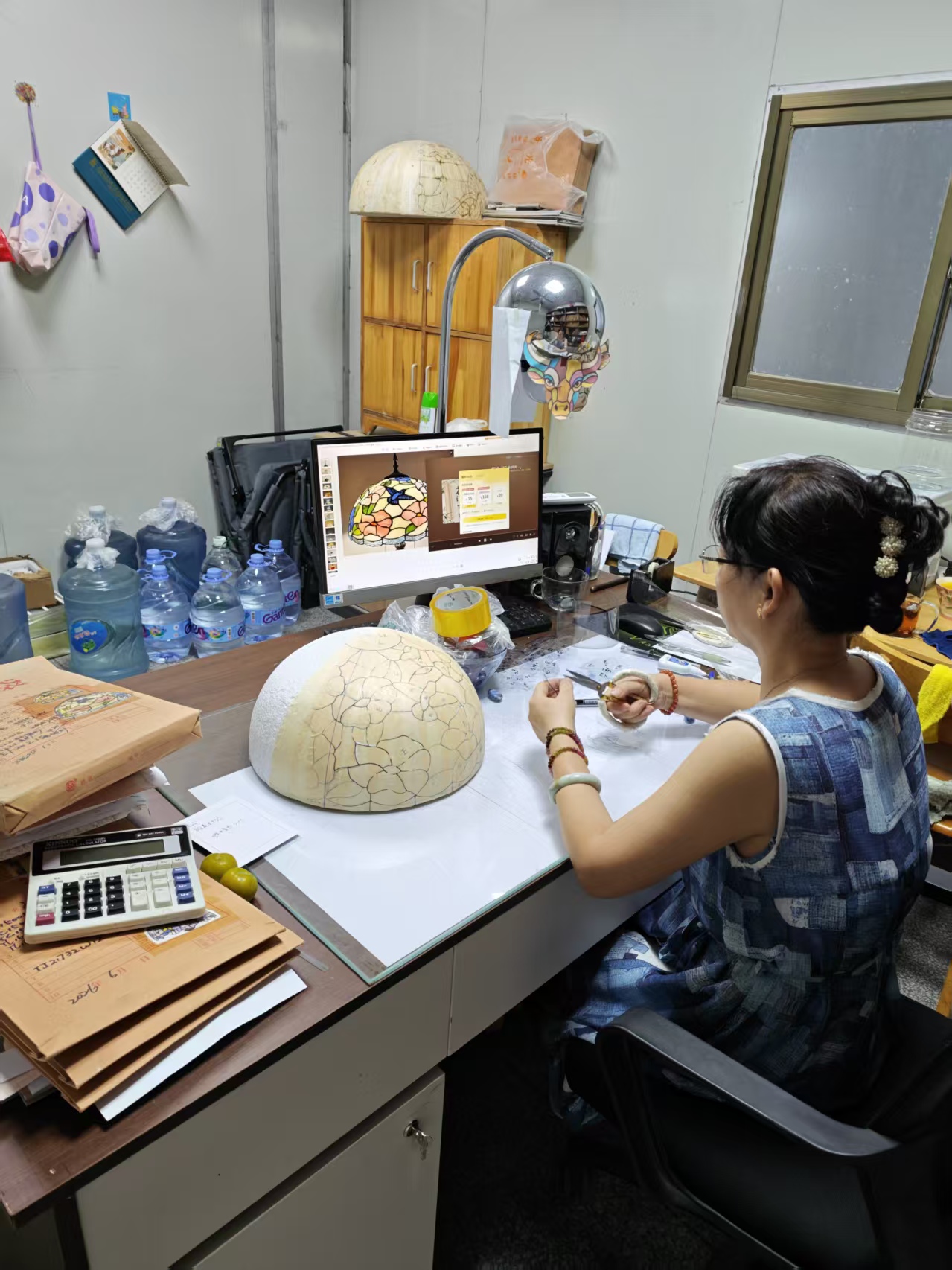
When to Choose OEM or ODM Lighting
OEM is a practical route when you have a defined product, brand specification, or repeat order requirement and need manufacturing support. ODM is better suited to buyers who need help adapting an existing style or developing a new lamp family for a target market or project. Both routes begin with the intended application, reference materials, required quantity, and technical requirements rather than a generic request for a catalogue.
- OEM: private-label production based on an approved specification, item number, or supplied design.
- ODM: collaborative development of patterns, shade families, fixture formats, or project-specific concepts.
- Factory quotation support begins from MOQ 30pcs, subject to the final product and project requirements.
What Can Be Customized
A custom Tiffany-style lamp can be developed around a shade pattern, color palette, shade diameter, base or fixture finish, lamp family, wiring requirement, label, and carton specification. The most useful starting materials are reference images, dimensions, an installation setting, target market, and expected quantity. These details help identify whether an existing catalogue design can be adapted or a new development route is required.
- Stained glass colors, texture mix, pattern theme, and shade dimensions.
- Table, floor, wall, ceiling, and hanging-lamp formats for coordinated collections.
- Fixture finish, wiring, plug standard, branding, labels, and protective packaging requirements.
A Clear Custom Order Workflow
A productive enquiry moves from requirements to feasibility review, quotation, sample or drawing confirmation where needed, production preparation, in-process inspection, final inspection, and export packing. For handmade stained glass lighting, the color direction, soldering expectations, base material, wiring specification, and packing approach should be agreed before production. This reduces avoidable revisions and makes the quotation conversation more useful for both sides.
- Share references and product requirements for an initial feasibility discussion.
- Confirm the quotation scope, specifications, and sample or drawing route before bulk production.
- Review finished-product details and packaging requirements before shipment arrangements.
Information to Include in a Quote Request
A concise, well-specified request receives a more useful factory response than a broad “please send price” message. Include the product type, reference image or item number, target quantity, market, electrical requirement, deadline, and any branding or packaging needs. If the project is still developing, indicate which decisions are fixed and which elements are open for discussion.
- Product category, reference images, item numbers, drawings, or desired visual direction.
- Quantity, target market, voltage or plug requirement, and intended installation setting.
- Branding, carton, label, testing, timing, and delivery details where known.
Who This Manufacturing Service Supports
OEM and ODM cooperation is particularly useful for importers, distributors, lighting brands, retailers, interior designers, hospitality buyers, restaurant groups, and decorative-lighting projects that need repeatable product families rather than a one-off retail purchase. The same starting point can support a focused product line or a coordinated set of table, hanging, wall, ceiling, and floor fixtures.
From Catalogue Model to Custom Lighting Family
Many projects begin with a catalogue model because it gives the discussion a clear shape, pattern, and construction reference. From there, a buyer can explore color adjustments, another fixture format, a complementary lamp size, or custom branding. This route is often more efficient than starting with an entirely blank brief while still leaving room for a distinctive product direction.
OEM & ODM Stained Glass Lamp FAQs
What is the difference between OEM and ODM stained glass lamps?
OEM production follows a buyer-approved specification, item number, or supplied design. ODM support helps adapt an existing style or develop a new lamp concept around the buyer’s market, application, and visual direction.
What information is needed for a custom lamp quotation?
Please share the product type, reference images or item numbers, expected quantity, target market, electrical requirement, preferred size or color direction, and any packaging or branding requirements.
Can a catalogue lamp be adapted for a project?
Yes. A catalogue model can be used as a starting point for a discussion about glass color, shade size, fixture finish, electrical details, labels, packaging, or a coordinated lamp family. Final feasibility depends on the approved requirement.