What should you send to Tiffany lamp manufacturers before requesting a custom sample? This ArtGlassLamp case follows a red stained glass table lamp from the customer's design reference to the factory's sample design sketch and four photographs of the completed sample. It shows how a visual idea becomes a clearer brief for discussing shape, glass, base details and the finished appearance.
The six images document three distinct stages: Image 1 is the customer's submitted design example; Image 2 is the sample design sketch prepared by the factory; Images 3–6 show the completed sample. Keeping these stages separate helps buyers compare the original idea, the proposed interpretation and the physical result.
1. The customer design reference: define the starting point
The customer's reference shows a domed red shade with narrow vertical divisions, small amber-colored decorative accents and a double chevron border in light and dark tones. It also includes front and top views, a decorative base and a pull-chain switch. The annotated dimensions are 37 cm overall height, 20 cm shade diameter and 15 cm shade height.
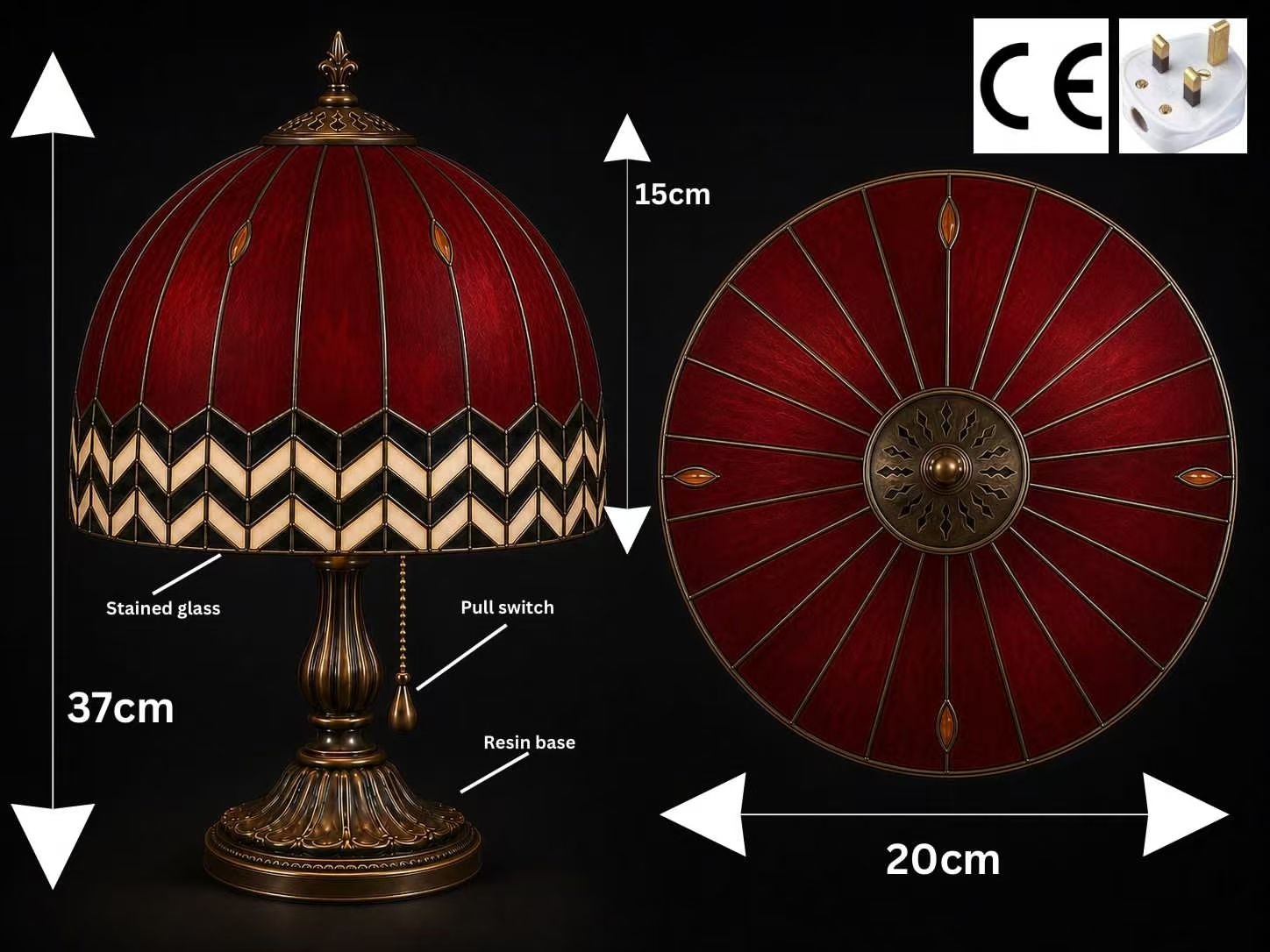
These annotations belong to the reference brief, rather than verified measurements of the completed sample. The same image labels a resin base and shows a UK-style plug and a CE mark. Base material, switch arrangement, plug configuration and any compliance documentation should be confirmed separately for the requested product; a symbol in a reference image does not establish the finished sample's compliance.
2. The factory sample sketch: clarify the proposed design
The factory's sample design sketch carries forward the red dome and contrasting chevron border while presenting a different base shape and a darker overall base appearance. This is the stage to compare the proposed proportions, the shade-to-base relationship and the decorative details before relying on the drawing as a production reference.
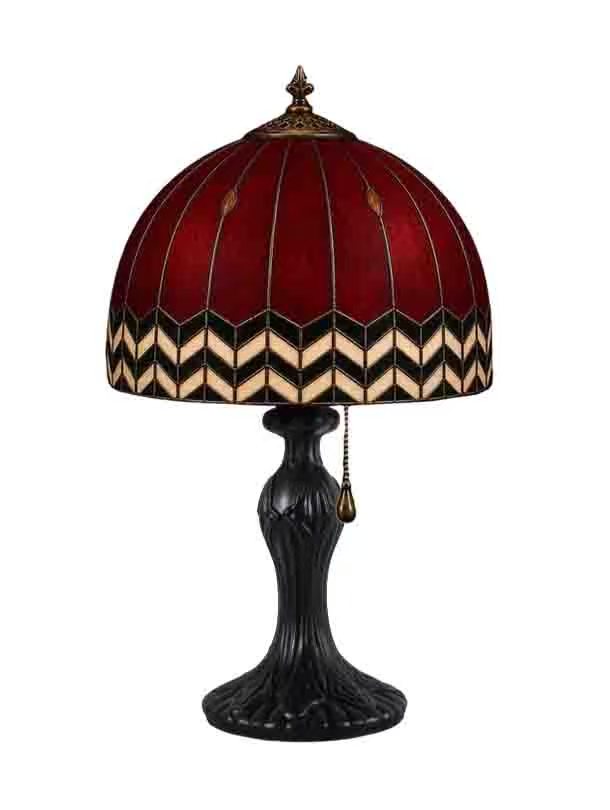
A useful sample brief identifies what must remain fixed and what the factory may adapt. In this case, a buyer could specify the red glass direction and chevron pattern as key visual features, then ask for confirmation of the base design, finial, glass divisions and control arrangement. Record changes against a dated version of the design so the reference image and the revised proposal cannot be confused.
3. The completed sample: compare lit, unlit and detail views
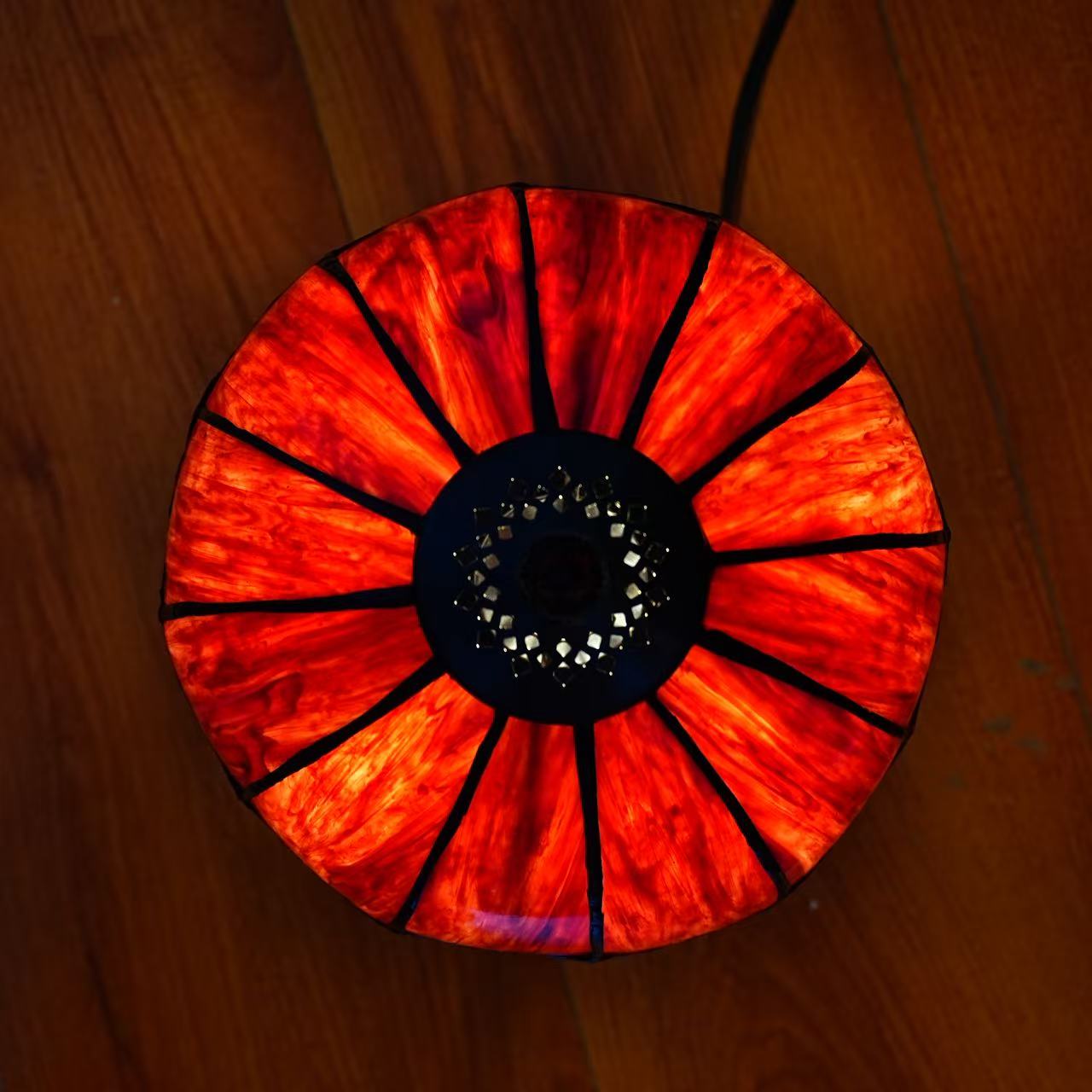
The completed sample photographs show the red stained glass shade on a sculpted, dark-finished base. In the illuminated front and angled views, the red panels glow in shades of red and orange, while the light chevrons create a strong contrast with the dark border. The top view provides another way to review the radial glass layout and the cap detail. These views help a buyer assess the whole lamp as well as individual design features.
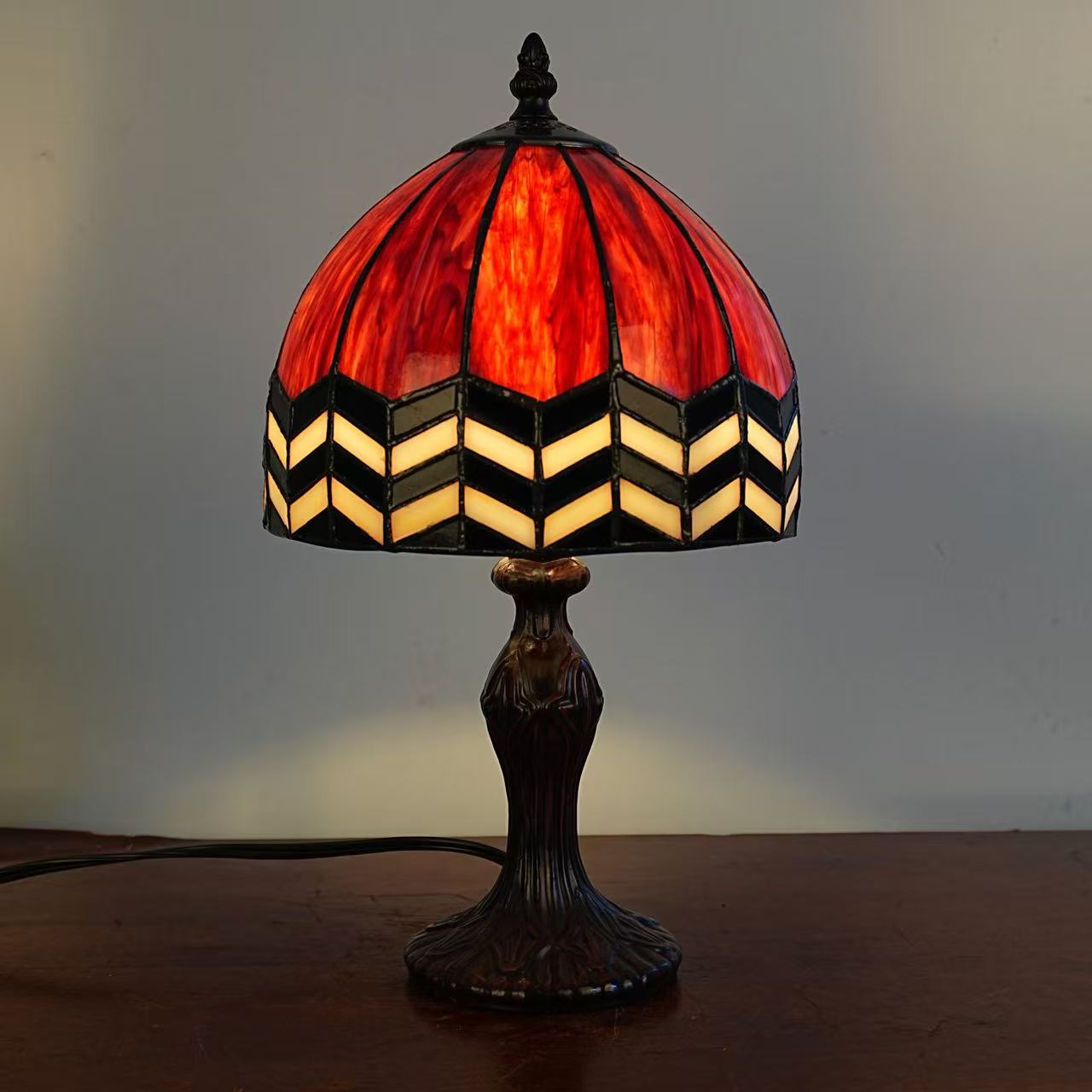
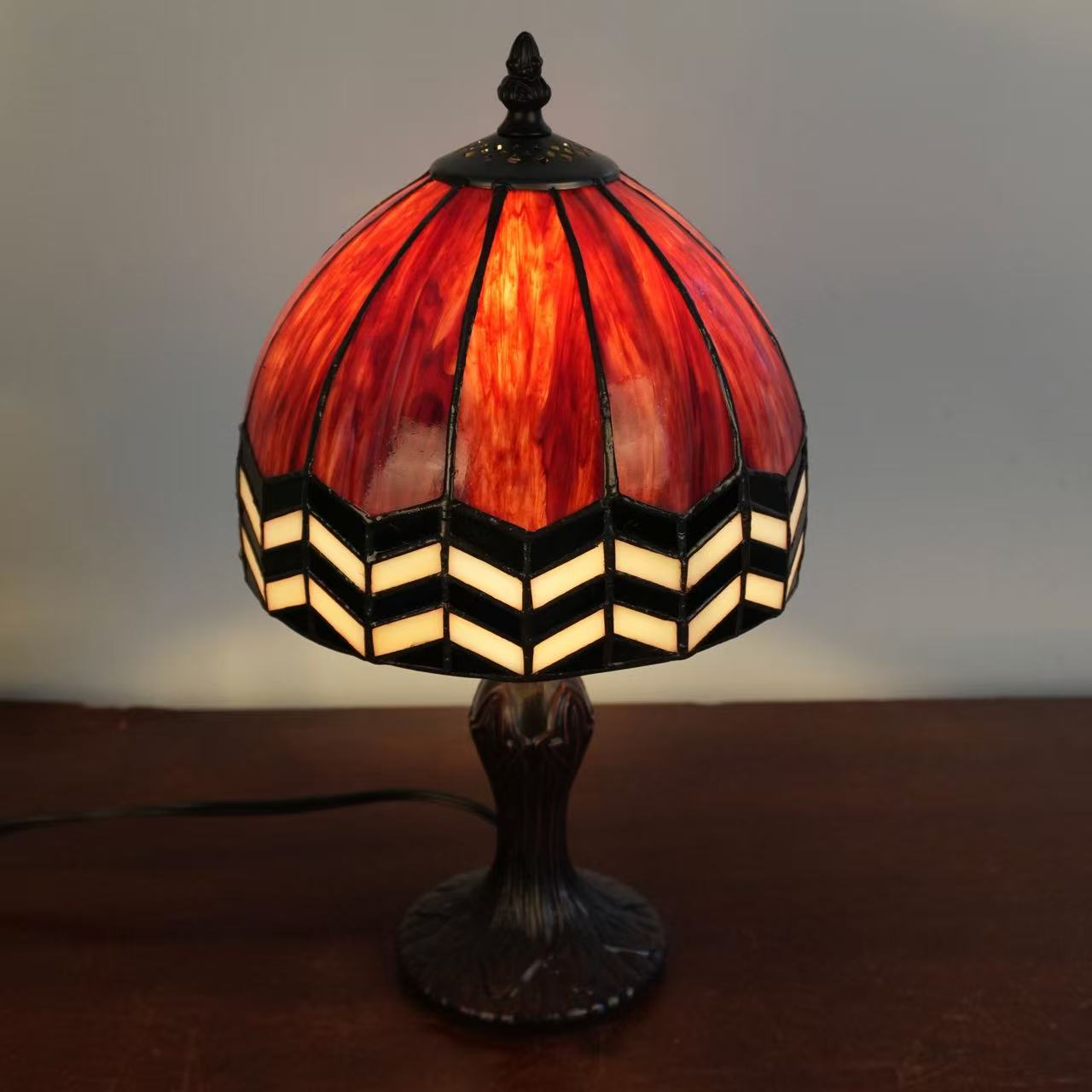
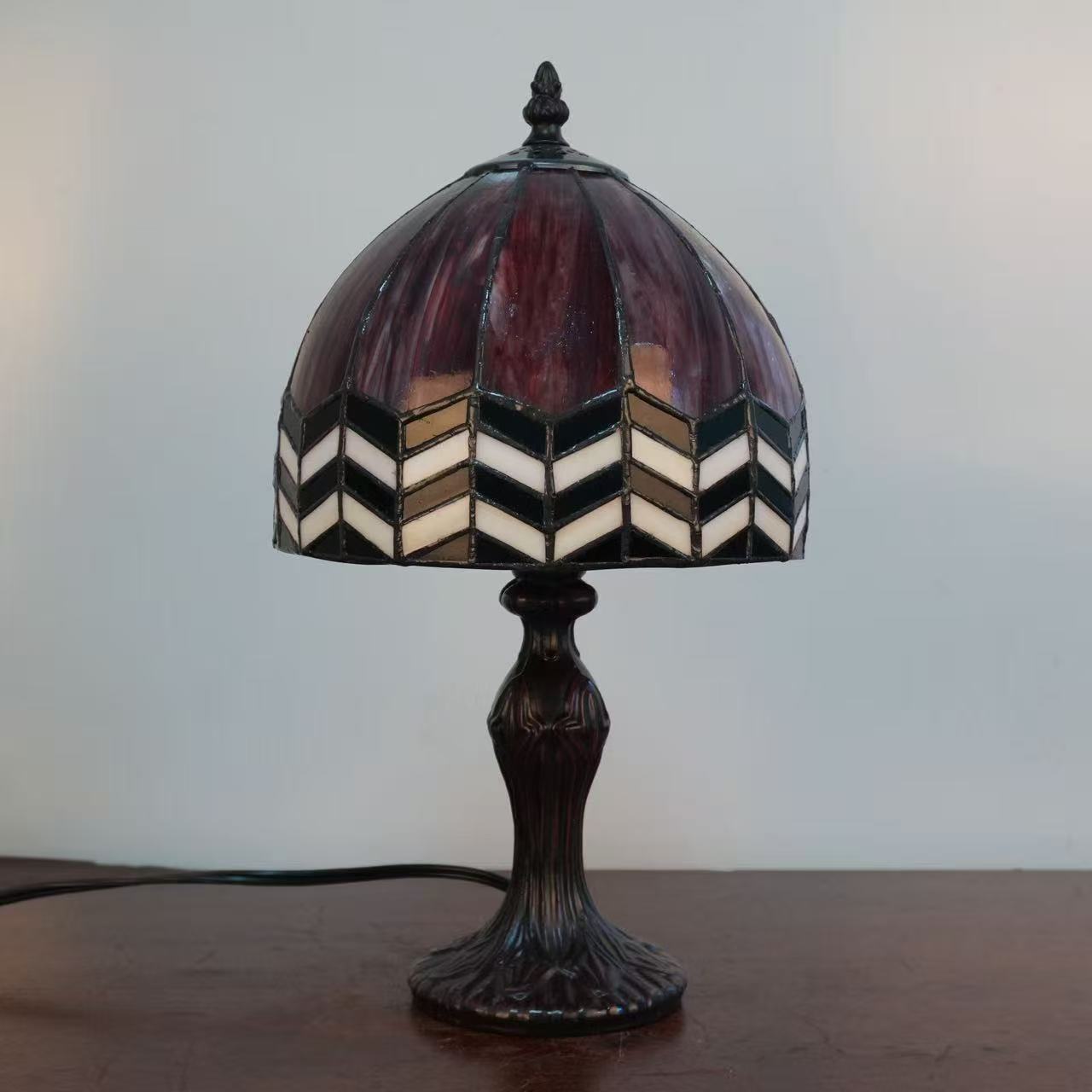
The unlit photograph shows a much deeper red shade and a paler-looking chevron border under ambient light. Reviewing both lit and unlit views makes the appearance discussion more precise. Also compare differences directly: the small amber-colored accents visible in the reference are not visible in these completed sample photographs, and the pull-chain arrangement is not demonstrated. Record these points for confirmation rather than assuming every detail of the reference has been reproduced.
4. What to include in your Tiffany lamp sample brief
Design and dimensions: attach the reference image and factory sketch, identify each version, and list the required overall height, shade diameter and shade height with units. Mark which dimensions are essential and request measurements of the physical sample. Specify the desired red glass appearance, chevron layout, base shape and finish, including any decorative details that must be retained.
Configuration and review: state the destination market, required plug, lamp holder and switch type. If dimming is needed, include it as a separate requirement for confirmation; these photographs do not demonstrate dimming. Request front, angled, top and unlit photographs, then record accepted details, requested changes and unresolved questions. Agree on sample cost, preparation time and the scope of any further sample review before proceeding.
5. Start your custom sample enquiry
To discuss a custom Tiffany-style lamp with ArtGlassLamp, send your design reference, preferred dimensions, quantity and destination country. Highlight what you want to preserve and what can change. The reference-to-sketch-to-sample sequence illustrated here gives both sides a practical basis for reviewing the design before confirming the next production step.
Explore the factory and catalogue sourcing processSend a sample enquiry