A studio, not a single hand
When people say “Tiffany lamp,” they often picture a glowing shade made from hundreds of pieces of colored glass. That image is inseparable from Tiffany Studios, the American design enterprise directed by Louis Comfort Tiffany (1848–1933). The studio’s work extended far beyond lamps: it included leaded-glass windows, mosaics, interiors, metalwork, blown glass, ceramics, and decorative objects.
For clarity, the Tiffany Studios discussed here is the historic art and design studio associated with Louis Comfort Tiffany. It is distinct from the contemporary jewelry company Tiffany & Co.
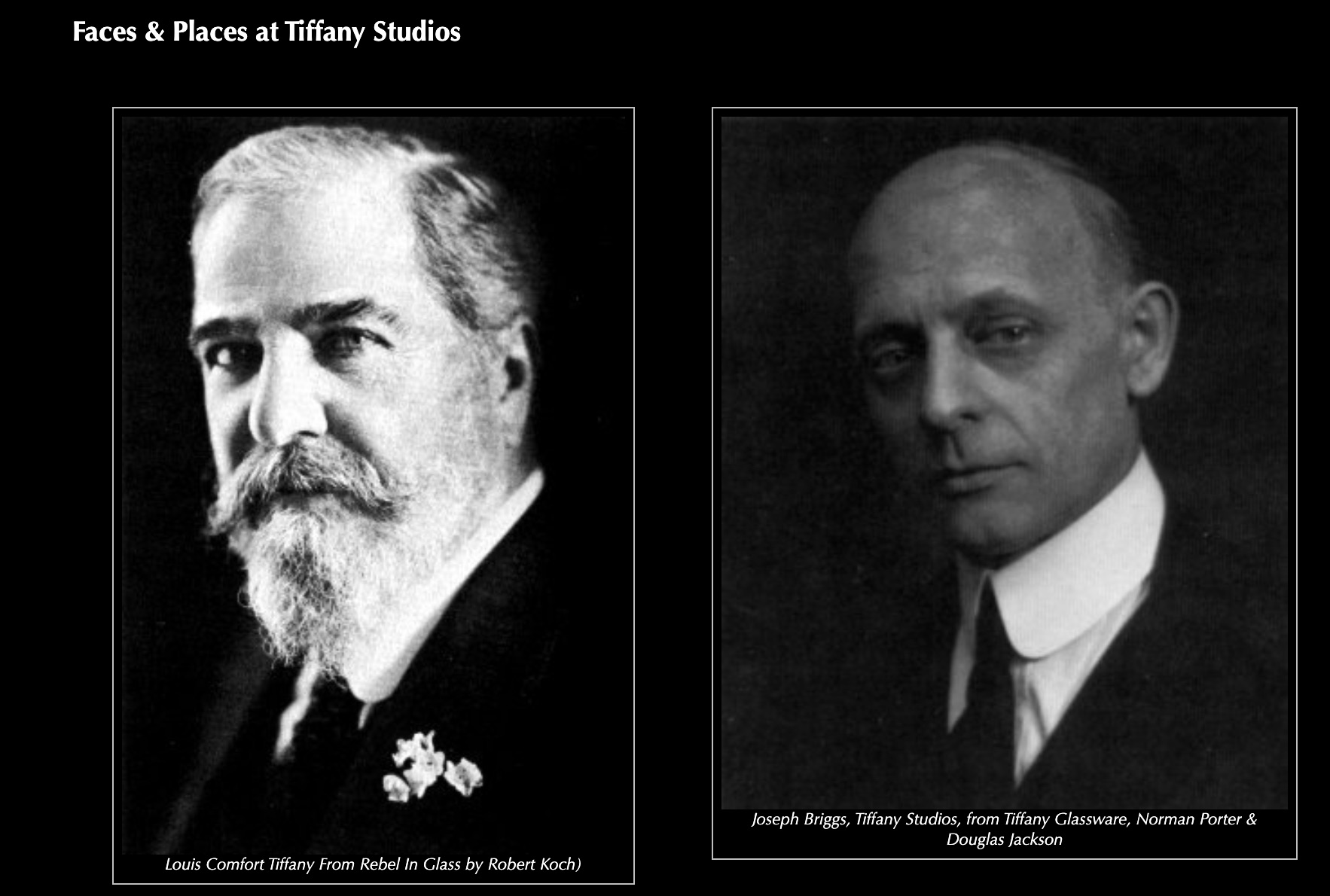
The two portraits in this article remind us that the story was never only about one famous name. Louis Comfort Tiffany supplied a wide artistic vision, while studio leaders, designers, glass selectors, metalworkers, and other craftspeople translated ideas into finished objects. Joseph Briggs, shown at right, was among the important people connected with the studio’s operations.
From decorative interiors to luminous glass
Louis Comfort Tiffany began as a painter, but by the late nineteenth century his attention had turned toward decorative art and interiors. His workshops explored what glass could do when color, texture, density, and transmitted light were treated as design materials rather than merely as surfaces to be painted.
Tiffany and other innovators of the period helped transform American stained glass through opalescent glass: material whose milky or layered color could create depth and atmosphere as daylight passed through it. Instead of relying only on painted details, artisans could select glass with natural variations in tone, ripples, streaks, and texture. The result made a window or shade feel alive in changing light.
The work behind the glow
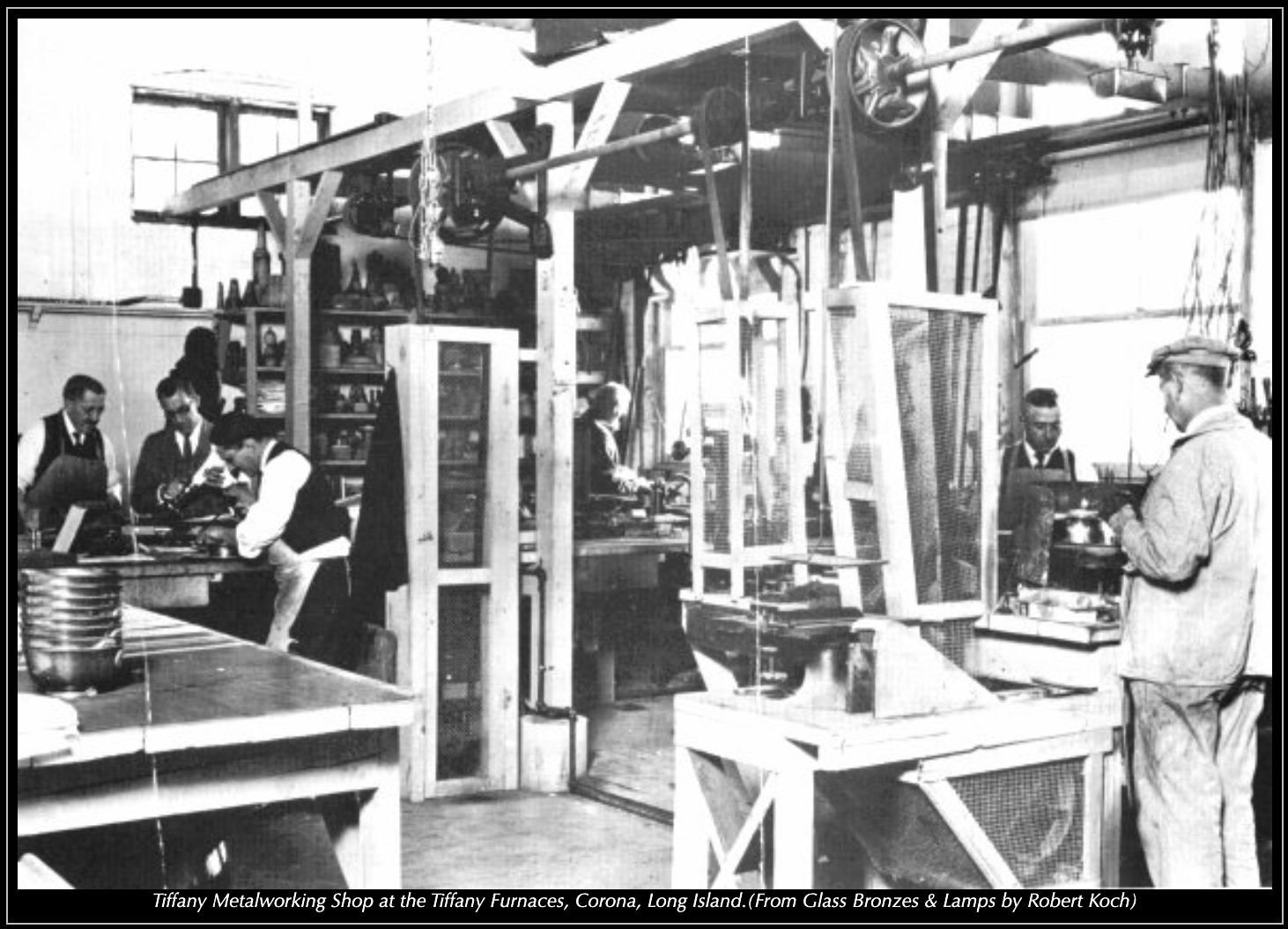
The historical photograph of the metalworking shop shows the practical side of a celebrated decorative art. Lamp bases, frames, fixtures, and fittings required engineering as well as ornament. The studio’s furnaces and workshops brought together many specialties: pattern preparation, glass cutting, copper-foil or lead assembly, soldering, patination, and metal fabrication.
This collaborative process is central to the history of Tiffany Studios. A lamp was not simply assembled from a pattern. The selection and placement of individual glass pieces changed how a design appeared when illuminated. Even shades made from the same underlying pattern could vary in color balance and visual character.
When electricity met nature
Tiffany Studios moved decisively into lighting around the turn of the twentieth century, at a time when electric light was changing domestic interiors. Floral, insect, and landscape-inspired shades turned the lamp into more than a utility: it became a small illuminated environment. Dragonflies, wisteria, peonies, lilies, geometric forms, and richly textured backgrounds became recurring visual languages.
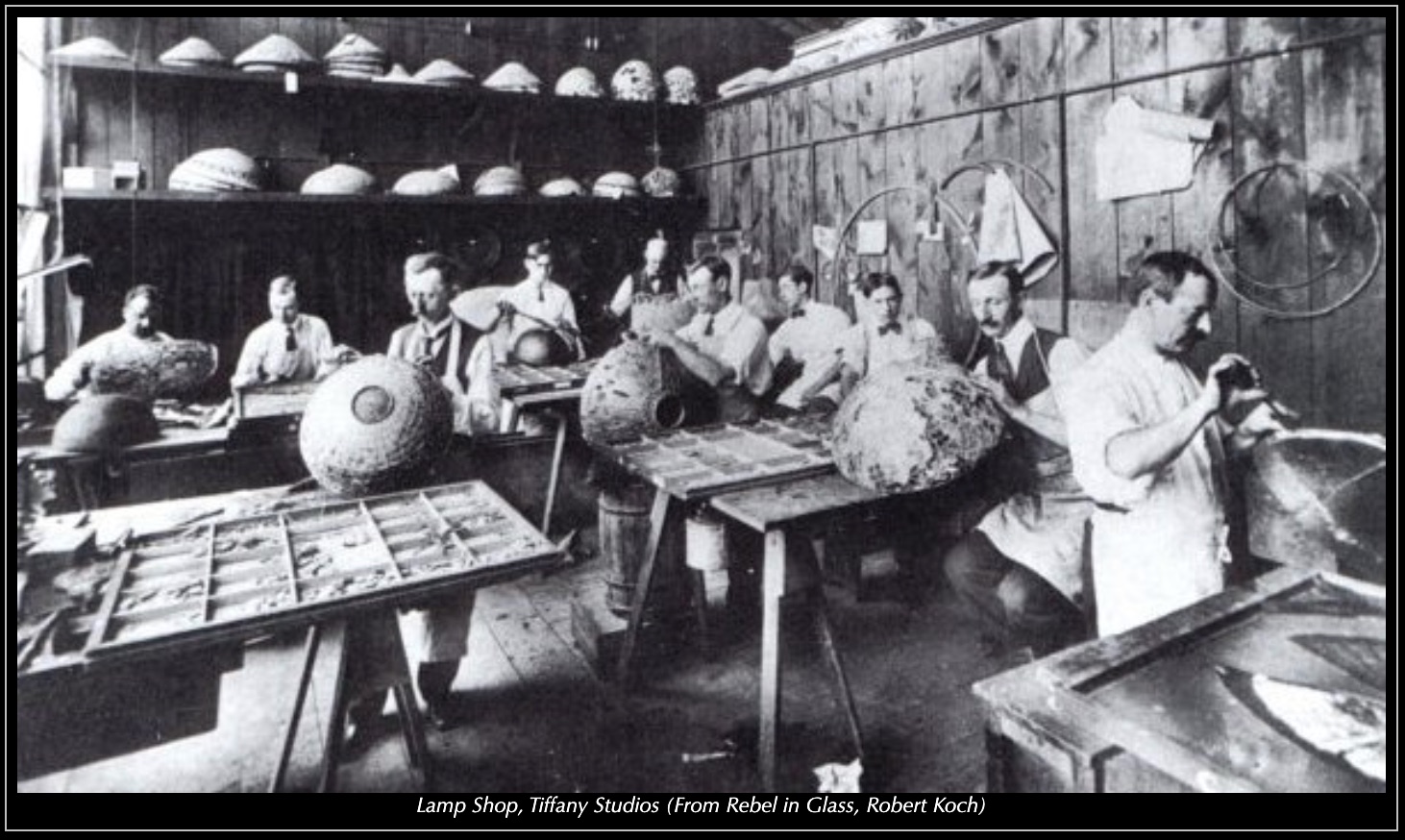
The lamp-shop photograph captures the scale of that ambition. Rows of shade forms, worktables, and craftspeople show how a decorative object could emerge from a structured workshop rather than from a single isolated maker. Many talented women also worked in Tiffany Studios, particularly in glass selection and cutting; their contributions are essential to understanding the studio’s design legacy.
Why the legacy still matters
The appeal of Tiffany-style lighting today is not only nostalgia. The best designs still teach a useful lesson: light changes color, material rewards close attention, and craftsmanship is often collaborative. For collectors, designers, and manufacturers, the historic studio remains a reference point for the marriage of art glass, metalwork, and functional lighting.
At ArtGlassLamp, we respect that history by focusing on the elements that make stained-glass lighting enduring: thoughtful color composition, clear glass selection, solid lamp structures, and careful hand assembly. Historical inspiration should be understood as inspiration—while every contemporary product, specification, and manufacturing process stands on its own.
Further reading
For museum-based historical context, see The Metropolitan Museum of Art’s Heilbrunn Timeline essay on Louis Comfort Tiffany and the Charles Hosmer Morse Museum of American Art’s resources on Tiffany lamps and lighting.